Cold Open
Andrew Douglas, 2023
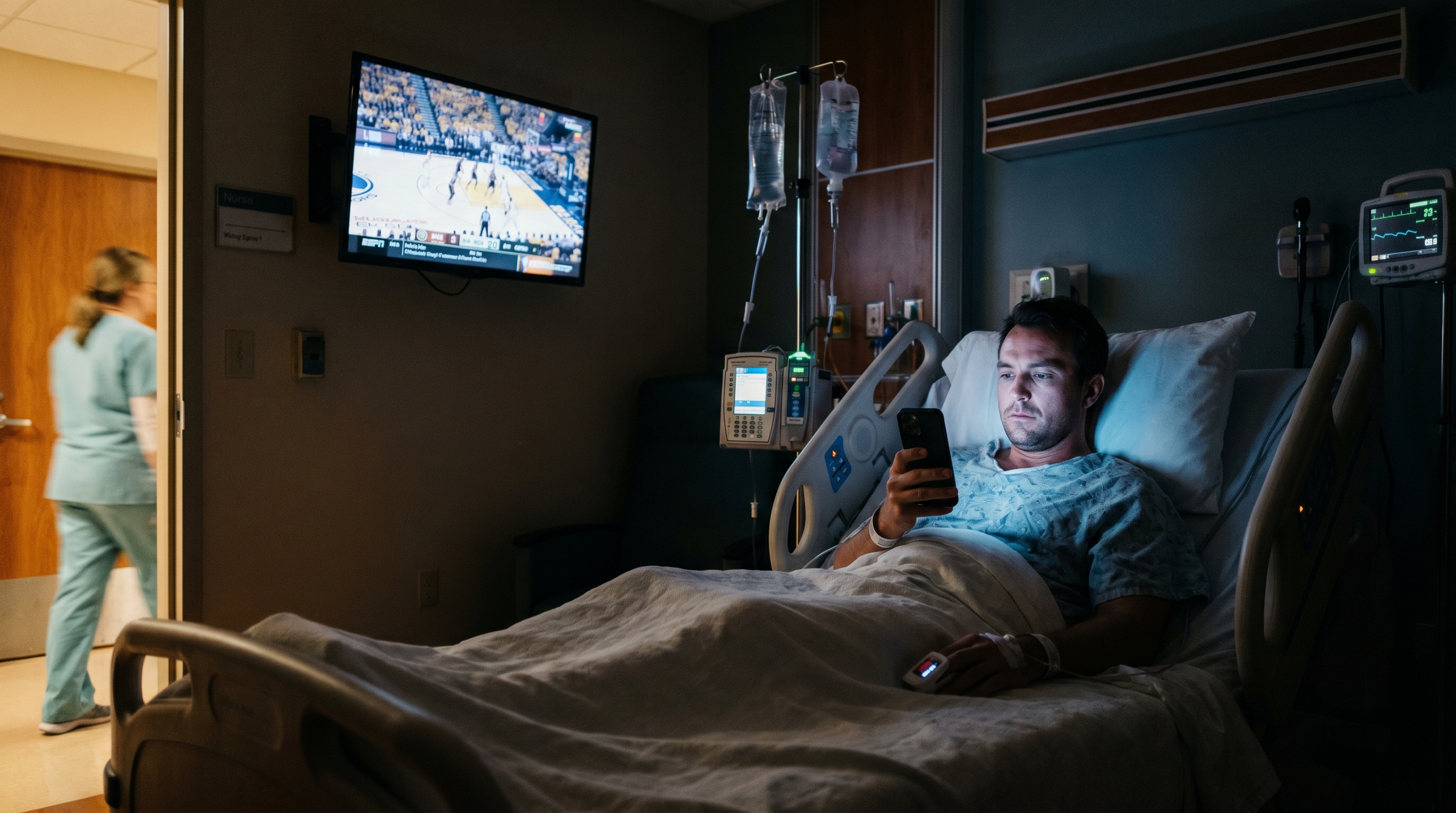
"In the hospital, where I was hooked up to a bunch of IVs, they turned the NBA Finals on and gave me my phone; I gambled away my last $100."
Andrew Douglas, a former college baseball player, tried to kill himself over gambling debts. He survived. In the hospital, hospital staff turned the NBA Finals on and gave him his phone. He opened FanDuel and gambled away his last $100.
This is the system working as designed.Source: Rolling Stone, "There's Now a Casino in Everyone's Pocket. For Some Young Men, It's a Near-Fatal Gamble" by Paul Solotaroff and Eli Senor, October 12, 2025. Douglas spoke on the record under his own name. He has also appeared on CNN and CBS.
The Scale
$5 Billion to $150 Billion. One Supreme Court Decision.
In May 2018, the Supreme Court struck down the federal law that had kept sports betting illegal in most of the country for more than 25 years. Within months, state after state legalized it. The apps arrived. The advertising arrived. The odds notifications arrived. The VIP hosts arrived.
Eight years ago, Americans placed around $5 billion in sports bets annually. Last year, that number reached nearly $150 billion across 39 states and Washington DC. By 2028, Americans will have bet and lost approximately $1 trillion since the 2018 decision.
Source: Rolling Stone, October 12, 2025. Senate Commerce Committee press release, May 1, 2026 ($165B market figure across 39 states and DC).
Approximately 1 in 5 people with a gambling problem will attempt suicide in their lifetime, a rate higher than any other addictive disorder. Approximately 52% of American men aged 18 to 49 now have an active online sports betting account.
Sources: National Council on Problem Gambling, Problem Gambling Awareness Month materials, 2025. American Sports Fanship Survey, Siena College Research Institute and St. Bonaventure University Jandoli School of Communication, released April 14, 2026.
Thread I / The Addicted
The Body Count
Frankie, late 20s, got married last May. His wedding guests sent him and his wife off with a pillowcase of cash. He lost it all on FanDuel. He defaulted on the mortgage.
"Suicide was my only option till I found Harry."
Marcus, a college student, owed money to every kid he knew. He was betting on Chinese ping-pong at 4 a.m. He tried campus counseling.
"As I'm talking to the counselor, she's pulling a manual off the shelf, looking up problem gambling."
Sources: Rolling Stone, October 12, 2025. Both Frankie and Marcus are identified only by first name in the original reporting.
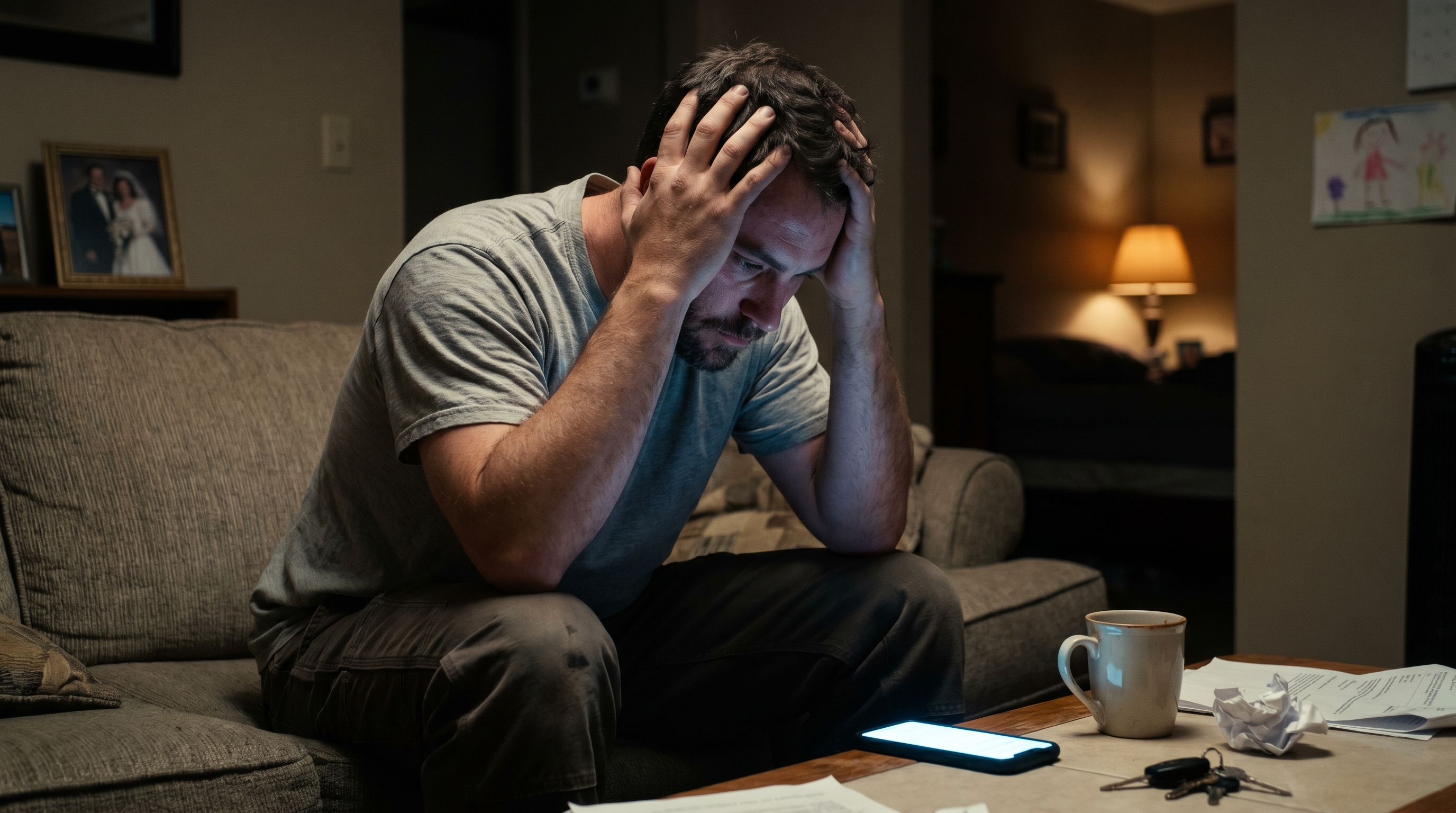
These are not isolated cases. Nationwide class action suits are piling up on behalf of young adults and families who lost loved ones to gambling-related suicide. The British charity Gambling with Lives, established in 2018 by families bereaved by gambling-related suicide, has documented hundreds of similar deaths annually in the United Kingdom, where the industry is further along.
Source: UK Parliament Hansard, "Gambling: Regulatory Reform" debate, December 2, 2025, citing Gambling with Lives research.
Thread II / The Apps
Engineered to Maximize Addiction
Terry Thompson, a Philadelphia-area finance executive, wagered more than $22 million on FanDuel and DraftKings between October 2020 and 2025. He lost approximately $1.8 million.
When Thompson tried to slow down, his FanDuel VIP host, Bryttanni Morgan, messaged him hundreds of times. She sent him a $500 bottle of Champagne and free tickets to Eagles, Flyers, and Sixers games. He took out second and third mortgages on his home. He contemplated suicide. He voluntarily checked himself into a psychiatric facility in February 2026.
Thompson is now one of two named plaintiffs in a landmark product liability lawsuit filed March 24, 2026, by the Public Health Advocacy Institute in the Court of Common Pleas of Philadelphia County. The complaint alleges the sportsbook apps are "unreasonably dangerous products intentionally designed to maximize addiction." Defendants include DraftKings, FanDuel, Genius Sports, and the National Football League itself.
Sources: PHAI press release, March 24, 2026; Philadelphia Inquirer, March 30, 2026; Insurance Journal, March 27, 2026; Popular Info, March 30, 2026. Case No. 260303384, Sage and Thompson v. DraftKings, Inc. et al.
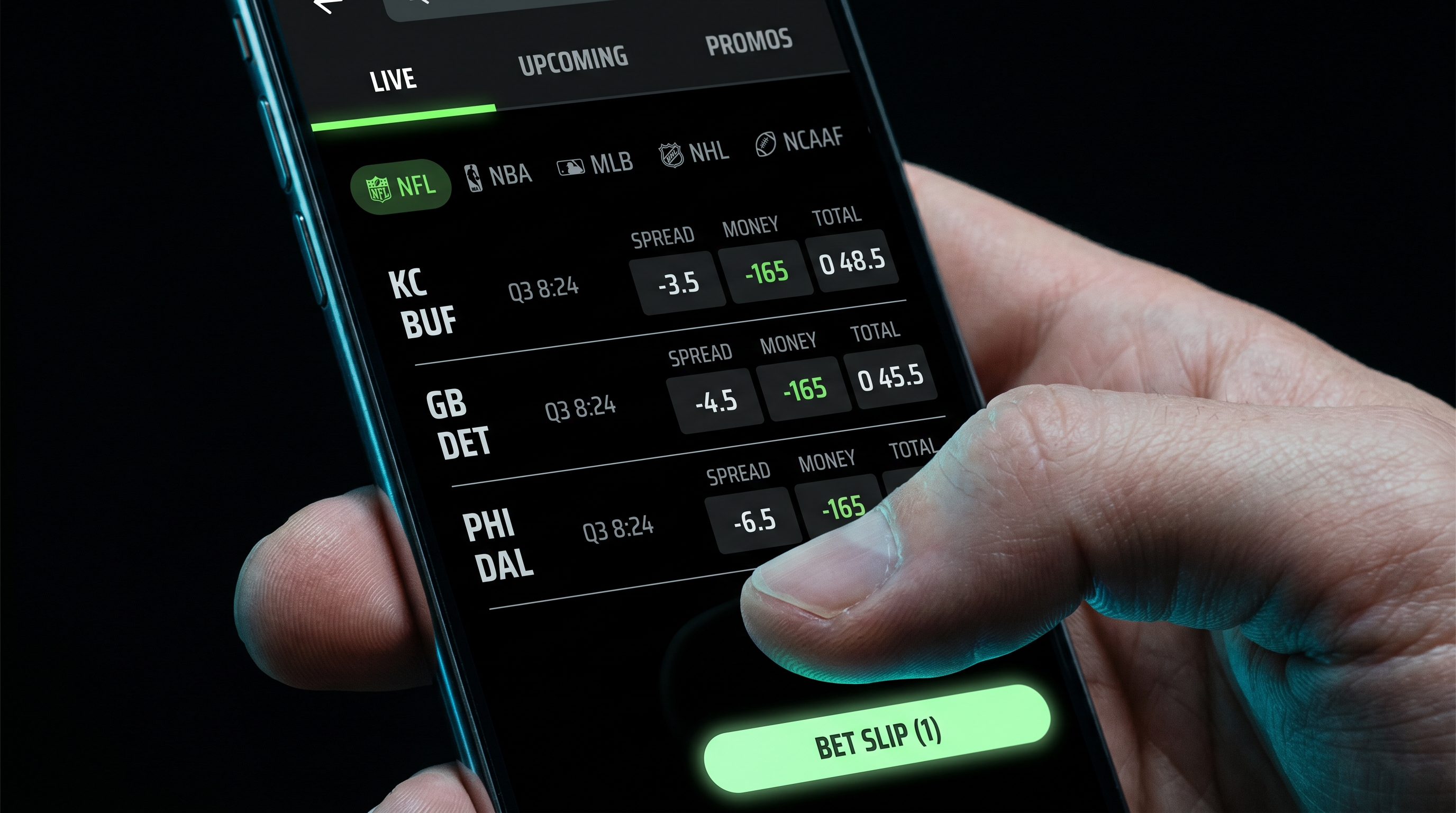
The Thompson case is one example of an industry-wide practice. Micro-betting allows wagers on individual pitches, plays, and possessions, creating a slot-machine rhythm inside live sporting events. AI-targeted push notifications and promotional offers are timed to each user's behavior. The book sees you. The book knows when you are most likely to bet again.
Thread III / The Fix
The Casino Is the State Now
Donald Trump Jr. is a paid advisor to Kalshi and an investor in Polymarket, the two largest prediction markets in the country, where users bet on elections, wars, and assassinations. Trump Media and Technology Group announced its own prediction market, Truth Predict, in late 2025.
On April 30, 2026, the Senate unanimously passed a resolution banning its own members and staff from trading on prediction markets, effective immediately. This came one week after Kalshi suspended and fined three congressional candidates for betting on their own races.
The NFL was Genius Sports' largest shareholder from 2021 to 2025 and remains the second-largest shareholder today. Genius Sports powers over 98% of the legal US sports betting market with official NFL data, earning commission on every microbet placed. In 2025, that revenue stream reached more than $125 million.
On April 23, 2026, US Army Special Forces Master Sergeant Gannon Ken Van Dyke, age 38, stationed at Fort Bragg, was indicted in the Southern District of New York for allegedly using classified information about the US military operation to capture Venezuelan President Nicolas Maduro to make winning bets on Polymarket. He wagered approximately $33,000 across 13 bets and won nearly $410,000. The case marks the first federal insider-trading prosecution involving a prediction market.
Sources for this section: CNBC, April 15 and April 30, 2026; CNN Politics, March 22 and April 23, 2026; PBS News, May 1, 2026; NBC News, May 1, 2026; Sportico, June 11, 2025; PHAI press release, March 24, 2026; Axios, April 23, 2026; federal indictment unsealed SDNY.
Full detail on all four pillars is on The Fix page.
Why Now
The Window Is Open. Right Now.
The Senate Commerce Subcommittee on Consumer Protection, Technology, and Data Privacy held its first formal hearing on sports betting and prediction markets on May 20, 2026. Title: "No Sure Bets: Protecting Sports Integrity in America." Chair: Sen. Marsha Blackburn. Harry Levant, Director of Gambling Policy at the Public Health Advocacy Institute, testified that the products are "a known addictive product, just like heroin."
By May 29, 2026, ten companies including DraftKings, FanDuel, Kalshi, and Polymarket were required to deliver youth-marketing data to Congress — the first time lawmakers compelled this disclosure. Congress demanded the data May 11, driven by Reps. Valerie Foushee, Paul Tonko, Betty McCollum, Kevin Mullin, and Sen. Richard Blumenthal.
The PHAI lawsuit has moved into discovery. The Van Dyke trial is set for December 7, 2026 — the first prediction market insider trading case to go to trial in US history. Google engineer Michele Spagnuolo was charged in May for using confidential company data to profit $1.2 million on Polymarket. House Oversight launched a formal investigation into Kalshi and Polymarket in May. Senator Warren set a June 18 deadline for CFTC answers on two anomalous oil trades totaling $1.75 billion. The Senate ban is law. The story is not coming — it is here.
Sources: Senate Commerce Committee press release, April 2026; Bettors Insider, May 13, 2026; Philadelphia Inquirer, May 19, 2026; DOJ press release, May 27, 2026; Warren letter to CFTC, June 10, 2026.